
Earthing Testing
Earthing Testing
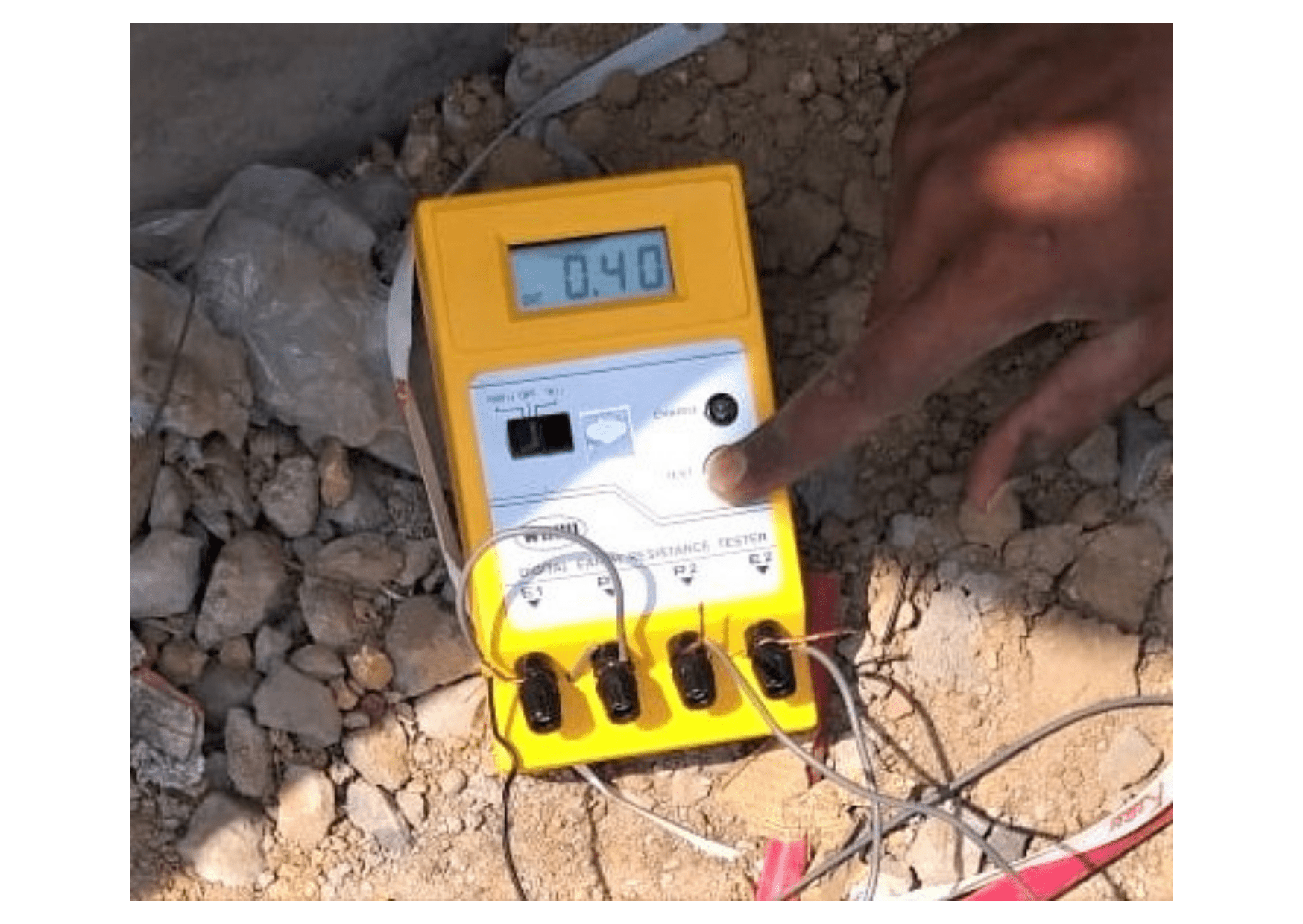
in electrical engineering, the term ground or earth has several meanings depending on the specific application areas. Ground may be the reference point in an electrical circuit from which other voltages are measured, a common return path for electric current (earth return or ground return), or a direct physical connection to the Earth.
Electrical circuits may be connected to ground (earth) for several reasons. In mains powered equipment, a connection to ground is done for safety purposes, to prevent accessible parts from acquiring a dangerous voltage in the event of a failure of electrical insulation. A connection to ground helps limit the voltage built up between power circuits and the earth, protecting circuit insulation from damage due to excessive voltage. Connections to ground may be used to limit the build-up of static electricity when handling flammable products or when repairing electronic devices. In some types of telegraph and power transmission circuits, the earth itself can be used as one conductor of the circuit, saving the cost of installing a separate run of wire as a return conductor. For measurement purposes, the Earth serves as a (reasonably) constant potential reference against which other potentials can be measured. An electrical ground system should have an appropriate current-carrying capability in order to serve as an adequate zero-voltage reference level. In electronic circuit theory, a ‘ground’ is usually idealized as an infinite source or sink for charge, which can absorb an unlimited amount of current without changing its potential.The use of the term ground (or earth) is so common in electrical and electronics applications that circuits in vehicles such as ships, aircraft, and spacecraft may be spoken of as having a “ground” connection without any actual connection to the Earth.